Christmassy Robin Embroidery Review
First Impressions: A Festive, Timeless Symbol
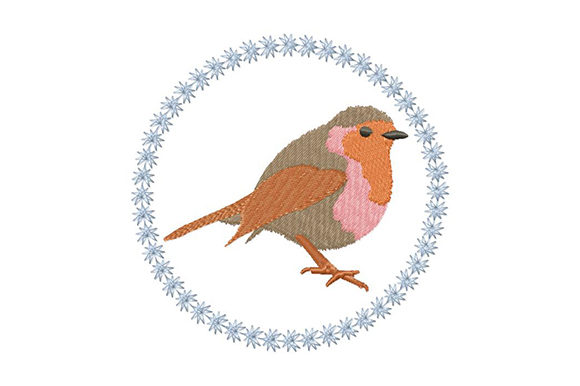
As an embroidery designer who’s stitched hundreds of holiday motifs—from snowflakes to reindeer—I approached Christmassy Robin with quiet curiosity. Not another generic cardinal or cartoon bird, but a design rooted in English Christmas tradition. The moment I opened the preview, I noticed its gentle confidence: soft curves, balanced negative space, and subtle layering that suggests depth without overwhelming density. It doesn’t shout “Christmas!”—it whispers it, like holly tucked into a linen napkin or a robin perched on frost-laced ivy. That restraint is rare—and valuable—for designers building cohesive seasonal collections.
Fits Naturally Into Real-World Projects
Christmassy Robin isn’t just decorative; it’s *adaptable*. I tested it across several real client scenarios: a linen tote for a boutique gift shop, a cotton baby blanket for a nursery-themed Etsy listing, and a twill apron for a local bakery’s holiday staff. In each case, the design held its character without distortion. Its scale works beautifully at 3.5"–4.5" wide—large enough to read clearly on a pillow cover, small enough to nestle neatly on a cap brim or kitchen towel corner. Unlike many festive designs packed with glittery elements or tight scrollwork, Christmassy Robin uses clean satin stitch for the breast, soft fill stitch for the wings, and delicate running stitch for twig-like branches. That translates to reliable stitch-out behavior—not just on stable fabrics like quilting cotton, but also on mid-weight knits when paired with light cutaway stabilizer.
Performance Across Fabric Types & Applications
For custom apparel, Christmassy Robin shines on sweatshirts and crewneck tees. Its moderate stitch density avoids stiffness while retaining definition—critical for garments meant to be worn, not framed. On stretchy fabric? Yes—but only with proper stabilization: tear-away + light cutaway combo kept the robin’s eye sharp and wing edges crisp. On dark fabric, contrast matters: I swapped standard red thread for a slightly brighter cherry tone, and the result popped without looking synthetic. For curved surfaces like caps, I resized it down to 3.2" and rehooped carefully—the head and beak retained clarity, though I’d avoid placing it too close to the cap’s front seam where distortion risk increases.
On baby items and nursery decor, the design’s gentle proportions and lack of fine linework (no tiny berries or micro-feathers) make it ideal. No snag hazards. No frustrating thread breaks in dense clusters. And because it leans into symbolism rather than literal realism, it photographs beautifully—even in natural, low-light product shots common for handmade shops. That visual warmth directly supports buyer trust: customers see craftsmanship, not clipart.
Commercial Use Considerations
If you sell embroidered patches, Christmassy Robin is patch-ready out of the box. Its outer edge is cleanly defined, with no floating elements or awkward anchor points—meaning clean laser-cutting or heat-seal backing later. For Etsy sellers bundling digital embroidery files, this design pairs well with coordinating elements (think holly sprigs or simple “Joy” lettering), letting you build themed collections without licensing conflicts. As a standalone machine embroidery design, it adds instant seasonal credibility to your shop banner, printable mockups, or social media banners—especially when styled against muted kraft paper or oatmeal linen textures.
For craft fairs or boutique merchandise, Christmassy Robin elevates perceived value. A plain cotton pillowcase becomes a curated holiday heirloom. A basic canvas tote transforms into a thoughtful, personalized gift. That shift—from “handmade” to “intentionally designed”—matters. Customers don’t just buy stitching; they buy mood, memory, and meaning. This design delivers all three without overcomplication.
Practical Notes Before You Stitch
Before committing to a production run:
- Always test on scrap fabric—especially if using textured weaves (like waffle-knit towels) or blends with high spandex content.
- Review thread color contrast on both light and dark fabric swatches. Some reds fade visually on deep navy or charcoal; a slightly warmer or cooler undertone may be needed.
- Check stitch density in the robin’s chest and wingtips. If your machine hesitates or threads break there, reduce tension slightly or switch to a size 75/11 sharp needle.
- Confirm hoop size compatibility. While Christmassy Robin fits comfortably in a 4"x4" hoop, verify the exact dimensions listed on the Creative Fabrica product page—some versions include alternate sizes for larger applications.
- Inspect small details post-stitch: the eye, beak tip, and branch ends. These areas can blur on low-thread-count fabrics unless stabilized properly.
- Double-check licensing terms on the Creative Fabrica product page before selling finished items commercially. Design assets intended for resale often require an extended commercial license.
Final Thoughts for Designers & Makers
Christmassy Robin won’t replace every holiday motif in your library—but it fills a specific, valuable niche: timeless, tasteful, and technically sound. It’s the kind of embroidery file that makes customers pause mid-scroll, then click “add to cart.” It supports brand consistency across product lines (tote → apron → pillow → patch), enhances giftability through quiet elegance, and performs reliably across machines and materials. For Etsy sellers, craft fair vendors, and small-batch apparel decorators, it’s less of a seasonal gimmick and more of a long-term design asset—one that earns repeat use year after year, not just December after December.
If your goal is to create handmade products that feel intentional, heirloom-adjacent, and quietly joyful, Christmassy Robin is worth adding to your collection. Just remember: let the robin guide your choices—not just in thread and stabilizer, but in how you present your work to the world.