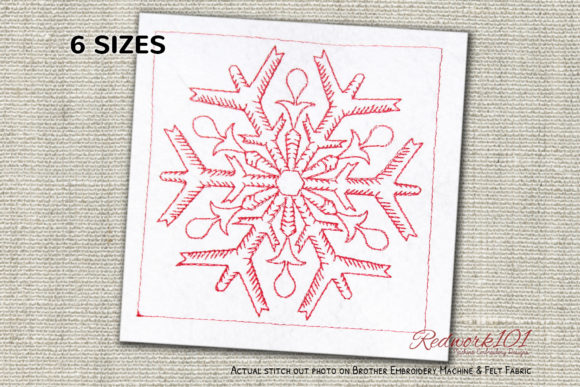
Snow Flakes Bluework: A Practical Embroidery Review
First Impression: Elegant Simplicity with Seasonal Flexibility
As an embroidery designer who’s digitized and stitched hundreds of small business assets—from café aprons to boutique tote bags—Snow Flakes Bluework immediately stands out for its quiet confidence. The name suggests classic winter charm, but “Bluework” signals something more intentional: a clean, structured, stitch-conscious approach—not just decorative, but design-led. It doesn’t scream “festive overload.” Instead, it reads as refined, timeless, and quietly versatile—ideal for brands that want Christmas spirit without sacrificing year-round relevance.
Real-World Business Use: Where Snow Flakes Bluework Shines
This isn’t just another holiday motif. Snow Flakes Bluework works exceptionally well across high-value small business applications:
- Embroidered patches for staff uniforms—especially on wool-blend aprons or denim jackets—where crisp geometry reads clearly at arm’s length;
- Chest logos for bakeries, florists, or indie studios wanting subtle seasonal warmth without overt holiday branding;
- Cap fronts on structured cotton twill or performance blends—its balanced negative space avoids crowding the curve;
- Tote bag designs for local markets or gift shops—scaled up to 3.5", it anchors the canvas without dominating;
- Product packaging accents, like embroidered tags on handmade soap bundles or ceramic mugs—adding tactile brand distinction;
- Apron embroidery for cafés and craft studios—its open structure prevents stiffness and holds up through repeated laundering.
The optional Box Stitch (as noted in the description) is a smart touch: it offers framing flexibility. You can include it for a polished, finished-patch look—or omit it entirely when integrating into larger custom apparel layouts where borders would compete visually.
Where to Use Snow Flakes Bluework Thoughtfully
Even strong designs need context-aware application. Here’s where extra attention pays off:
- Small patch sizes (under 1.75"): The snowflake’s fine arms may lose definition—always test stitch a 1.5" version on your target fabric before bulk production.
- Curved surfaces like cap fronts or knit beanies: Confirm spacing between elements remains legible after hooping and tension pull.
- Dark or textured fabrics: Because thread color contrast isn’t specified, verify visibility with your chosen thread palette—especially if using matte or heathered substrates.
- Frequent-wash items: High stitch density can stiffen fabric over time—review the fill areas; if dense, consider lightening underlay or adjusting satin column width for breathability.
Brand Identity Impact: More Than Just a Holiday Accent
For small businesses, every embroidered detail contributes to perceived professionalism—and Snow Flakes Bluework supports that intentionally. Its clean lines reinforce consistency across touchpoints: same snowflake on a staff apron, tote bag, and product tag builds visual cohesion without repetition fatigue. Customers subconsciously associate that clarity with care, attention to detail, and brand maturity.
Unlike overly ornate motifs, this design leaves room for your brand voice. A pet boutique can lean into gentle whimsy; a modern ceramics studio can highlight its structural elegance; a floral shop can pair it with muted sage thread for organic sophistication. It doesn’t override—it complements. And because it’s rooted in bluework tradition (think historical whitework embroidery), it subtly signals craftsmanship—valuable for handmade product positioning and Etsy buyer trust.
Practical Designer Notes for Commercial Embroidery
Before stitching Snow Flakes Bluework into client work or your own small business merch, run these checks:
- Test in black and white first: Remove color variables—does the shape hold? Are outlines distinct? Does spacing breathe?
- Confirm minimum viable size: Resize down to 1.25" and simulate on your embroidery software—do inner angles stay sharp? Do any elements merge?
- Review thread color contrast: Especially important if the outer box is used—ensure it enhances, not distracts from, the snowflake core.
- Inspect spacing and underlay: Tight curves or intersecting arms may need strategic underlay to prevent puckering on lightweight fabrics.
- Match hoop size to application: Cap embroidery often requires smaller hoops—verify compatibility before digitizing adjustments.
- Test on real fabric + stabilizer combo: A cotton poplin behaves differently than brushed poly—stabilizer choice directly affects stitch definition and drape.
- Create a printable mockup for client sign-off—show it scaled on actual garment flats, not just isolated on white.
- Compare beside existing design assets: Does it harmonize with your logo, typography, and other embroidery files in tone and weight?
- Verify commercial licensing: Since this is intended for small business merch and branded patch use, confirm the digital embroidery file includes rights for resale, promotional use, and physical product integration.
Final Thought: A Strategic Seasonal Asset
Snow Flakes Bluework isn’t just a Christmas embroidery file—it’s a flexible, brand-forward machine embroidery design built for longevity. Whether you’re launching holiday-themed tote bags for your local florist, embroidering staff caps for a winter pop-up café, or adding signature detail to handmade product labels, it delivers clarity, charm, and quiet authority. Paired with thoughtful digitizing, fabric-aware execution, and consistent visual strategy, it becomes more than decoration: it’s a stitch in your brand’s story—one that customers remember, recognize, and reach for again.