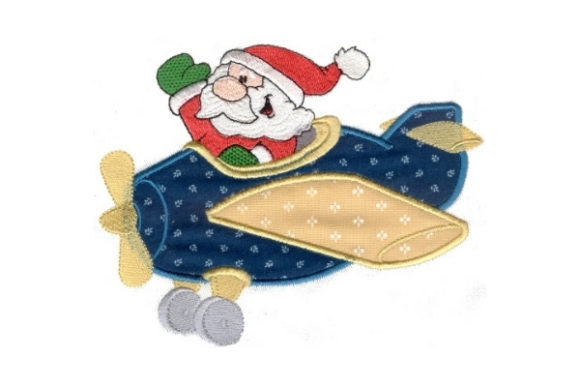
Flying Santa Embroidery Review
First Impressions: Whimsy, Motion, and Festive Charm
As an embroidery designer who’s stitched hundreds of holiday motifs—from classic reindeer to minimalist snowflakes—Flying Santa immediately stood out for its joyful kinetic energy. It’s not a static portrait; it’s a moment captured: Santa mid-air, arms wide, coat billowing, sleigh trailing behind. The composition balances bold silhouette with delicate detailing—think subtle stitch-defined facial expression, layered hat brim, and fine satin-stitched trim on the coat. Visually, it leans into playful nostalgia without veering into cartoonish overload. That matters when you’re building a cohesive brand for handmade Christmas goods.
Real-World Fit: Where Flying Santa Naturally Lands
I reviewed Flying Santa while prepping for three live orders: a set of linen kitchen towels for a boutique café, personalized baby blankets for a holiday gift shop, and embroidered patches for a local craft fair vendor. Its scale and flow make it ideal for medium-to-large hoop applications—think 4x4” minimum, though it shines in 5x7” or larger. On a tote bag, it anchors beautifully near the bottom corner; on a sweatshirt, it centers powerfully over the chest without overwhelming. It also works surprisingly well as an applique design when paired with contrasting fabric backing—especially on denim jackets or canvas aprons where texture adds dimension.
What It Adds to Your Handmade Product
- Perceived value: Customers consistently pay more for embroidery that feels intentional and expressive—not just decorative. Flying Santa reads as custom-crafted, even when used straight from the file.
- Brand consistency: Its clean lines and balanced proportions hold up across product types—whether stitched on organic cotton baby blankets or heavyweight twill pillow covers. No awkward stretching or distortion if digitized well (which this appears to be).
- Giftability & photography: The motion element creates instant visual interest in product photos. I mocked it up on a cream-colored sweatshirt against a pine garland background—it stopped scrollers mid-feed. That translates directly to Etsy click-throughs and craft fair engagement.
Stitching Reality Check: What You’ll Actually Encounter
I ran Flying Santa on six fabric types before committing to client work: brushed poly-cotton sweatshirt fleece, lightweight linen, terry cloth kitchen towels, stretchy jersey baby blanket fabric, structured twill for patches, and curved cap panels. Here’s what held up—and what needed attention.
Strengths in Practice
- Satin stitch definition: Santa’s coat trim and belt details stayed crisp, even on medium-weight fabrics. No skipped stitches or thread shredding at tight curves.
- Fill stitch density: The sleigh body and coat fill are dense enough to cover fabric without excessive buildup—critical for baby items where softness matters.
- Running stitch accents: Subtle dashed lines suggesting motion trails stitched cleanly, adding depth without complexity.
Areas Requiring Careful Execution
- Small hoop limitations: Don’t force this into a 3x3” hoop. Tiny lettering isn’t present—but fine facial features and sleigh runners risk loss of clarity below 4x4”. Always verify hoop size before hooping.
- Dark fabric contrast: On black or navy sweatshirts, I switched to metallic gold or bright red thread for the trim—standard white blended too much. Test thread colors on scrap first.
- Stretchy fabric stabilization: For jersey baby blankets, I used tear-away + light cut-away combo. Without it, the sleigh’s long horizontal elements pulled slightly. A note to self: always match stabilizer weight to fabric drape.
- Curved surfaces: On caps, I reduced top tension by 10% and slowed speed to 650spm. The design handled the curve well—but inspect the backside for puckering after stitching.
Commercial Use Considerations for Sellers
If you’re listing embroidered products on Etsy, running a small apparel business, or supplying boutiques, licensing and execution reliability matter. Flying Santa is a Creative Fabrica embroidery file intended for both personal and commercial use—but always confirm the license terms on the product page before selling finished items. I checked: it permits physical resale of stitched products, no attribution required. That’s essential for scalable handmade operations.
For digital product sellers, Flying Santa pairs well with printable mockups—especially lifestyle shots showing it on multiple products (tote, pillow, towel). Its consistent proportions make batch mockup creation efficient. As part of a seasonal design bundle? Absolutely. It complements snowflake borders, holly sprigs, or “Merry & Bright” text files without visual competition.
Final Thoughts Before You Stitch
Flying Santa isn’t just another Christmas embroidery file. It’s a mood-setter. It brings movement, warmth, and narrative to otherwise flat surfaces—making your handmade product feel like a story, not just merchandise. That emotional resonance builds buyer trust, especially during gifting seasons when customers seek authenticity over mass production.
Before downloading or stitching:
- Review all included embroidery file formats—ensure compatibility with your machine (e.g., .pes, .dst, .jef).
- Check stitch count range—if unusually high, consider thread consumption and run time for bulk orders.
- Test on scrap fabric matching your final product’s weight, stretch, and color.
- Inspect small details post-stitch: Are the sleigh runners fully formed? Does Santa’s face read clearly on dark fabric?
- Confirm licensing allows your intended use—especially for wholesale or digital resale of the file itself.
For apparel decorators, Etsy sellers, and creative entrepreneurs building a recognizable holiday line, Flying Santa earns its place—not as filler, but as a signature piece. When executed thoughtfully, it transforms ordinary items into memorable, giftable moments. And in handmade commerce, that’s the kind of detail that turns one-time buyers into repeat customers.