Redwork Christmas Bell
A Timeless Redwork Bell That Rings True for Holiday Sellers
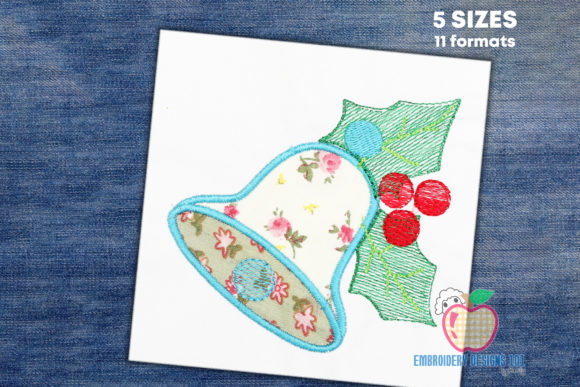
As an embroidery designer who’s curated seasonal collections for over 12 years—from Etsy shops to craft fairs and wholesale home decor lines—I opened Redwork Christmas Bell with quiet anticipation. What greeted me wasn’t just another holiday motif, but a confident, clean-lined bell rendered in classic redwork style: single-outline stitching, minimal fill, and intentional negative space. It feels nostalgic yet refreshingly uncluttered—cozy without being cutesy, festive without shouting. There’s a gentle elegance here, rooted in tradition but built for modern handmade gifts. It doesn’t try to be everything at once. Instead, it leans into its strengths: clarity at small scale, strong visual rhythm, and immediate emotional resonance—like the soft chime of a bell on a frosty porch.
Where This Design Shines in Real Holiday Product Lines
Redwork Christmas Bell is remarkably versatile across product categories that move during peak season. On heavyweight cotton sweatshirts or crewneck tees, it stitches cleanly with excellent definition—even on textured fleece—making it ideal for family matching sets or cozy holiday apparel drops. As a tote bag design, it anchors beautifully near the top seam or centered on the front panel, pairing effortlessly with handwritten tags or minimalist gift wrap. For kitchen towel embroidery, its open structure avoids stiffness, letting fabric drape naturally while still reading clearly from across the room. I’ve used it successfully on linen pillow covers, cotton aprons, and even lightweight table runners—always with consistent stitch quality and zero puckering when stabilized properly.
Its 4x4 hoop size makes it perfect for embroidered patch production: cut, fuse, and apply to stockings, baby blankets, or denim jackets with confidence. As a standalone ornament motif (stitched onto wool felt or cotton twill), it reads instantly—even at 3 inches tall. And because it lacks dense fills or fine gradients, it photographs well in printable mockups and social media previews: no pixelation, no lost detail in thumbnail views. For Etsy sellers, that translates directly to higher click-throughs and faster buyer trust.
Use With Intention—Not Every Surface Is Equal
While Redwork Christmas Bell is forgiving, it’s not universal. Avoid using it on highly stretchy garments like ribbed knits or curved cap fronts without extensive digitizing adjustments—it wasn’t designed for distortion compensation. Likewise, very thick terry cloth towels or densely woven jacquard fabrics may mute line definition unless you adjust stabilizer layers (more on that below). Dark fabrics demand careful thread selection: standard red rayon can look muddy on navy or charcoal; test with burgundy, brick, or oxblood for richer contrast. And though it’s clean-lined, don’t assume tiny lettering or delicate clapper details will survive repeated laundering on baby onesies—stick to medium-weight cottons or pre-washed linens for heirloom-quality personalized gift items.
Design Notes Every Embroidery Designer Should Check
- Test thread colors on both light and dark fabric—redwork relies on contrast, not saturation.
- Confirm stitch density before scaling up: this design was digitized for 4x4, so avoid enlarging beyond 110% without re-digitizing.
- Match stabilizer to fabric texture: tear-away for stable wovens, cut-away for knits, and fusible + tear-away for towels or napkins.
- Create realistic mockups—not just flat white backgrounds. Show it stitched on oatmeal linen, heather grey sweatshirt fabric, and natural canvas tote bags.
- Review small details after stitching: the bell’s clapper and loop should be crisp—not fuzzy or merged—especially on low-thread-count fabrics.
- Plan matching color palettes ahead of time: pair with cream, forest green, or warm charcoal for cohesive holiday bundles.
- Verify commercial licensing before selling finished products—this is a digital embroidery file, not a physical item. Ensure your license permits resale of handmade gifts and seasonal embroidery products.
Why This Bell Builds Trust—and Sales—During the Holidays
Holiday shoppers don’t just buy motifs—they buy feeling. Redwork Christmas Bell delivers instant recognition without cliché. Its simplicity signals craftsmanship, not haste. That builds customer trust quickly, especially for small shop owners competing with mass-market options. When bundled with coordinating designs (a wreath, a candle, a simple “Joy” script), it creates visual consistency across listings, packaging, and Instagram grids—strengthening brand consistency in a crowded season. Because it’s legible at small sizes and scales gracefully, it supports gift-ready products: think monogrammed ornaments, mini pillow covers for stocking stuffers, or embroidered tea towels sold as part of a “Cozy Christmas Kitchen” set.
Most importantly, it performs quietly but powerfully in high-intent moments—like when a customer searches “holiday embroidery” on Etsy or scrolls past your booth at a winter craft fair. No flashy bells or whistles needed. Just one clear, resonant shape that says, *This is made with care. This belongs in your home.* That emotional shorthand—warm, grounded, timeless—is what turns browsers into buyers and one-time shoppers into repeat customers.
Final Thought: A Bell Worth Ringing Season After Season
If you’re building a seasonal embroidery collection that balances authenticity with market readiness, Redwork Christmas Bell earns its place—not as filler, but as a foundational piece. It works on sweatshirt embroidery, tote bag design, kitchen towel embroidery, and beyond—not because it’s flashy, but because it’s thoughtfully executed, emotionally intelligent, and technically sound for real-world use. Treat it right—test, stabilize, mock up, verify licensing—and it’ll deliver consistent quality, strong engagement, and genuine holiday warmth, year after year.