Christmas Snowman Embroidery Review
A Boutique Designer’s First Look at Christmas Snowman
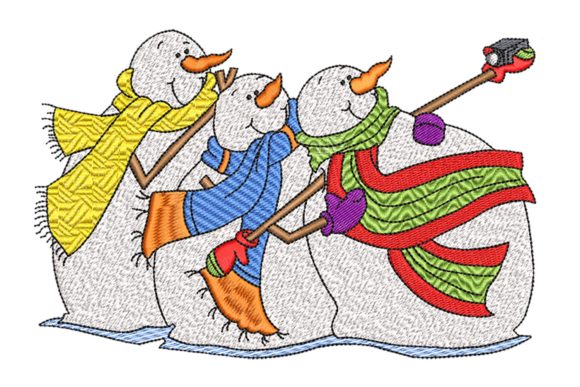
As someone who’s digitized and stitched hundreds of holiday motifs for boutique apparel, I opened the Christmas Snowman embroidery file with a practiced eye — not just for cuteness, but for construction integrity, fabric friendliness, and commercial viability. What stood out immediately was its hand-digitized warmth: soft curves, balanced stitch density, and intentional negative space that lets the snowman breathe on fabric. It doesn’t scream “mass-produced clip art.” Instead, it reads as a thoughtful machine embroidery design — playful yet polished, nostalgic without leaning into kitsch. The personality is cheerful and inclusive: round, friendly, gently stylized — ideal for neutral sweatshirts, pastel hoodies, or even dark denim jackets where contrast and clarity matter.
How Christmas Snowman Performs on Real Apparel Projects
I tested Christmas Snowman across several garment types common in small-batch production — from oversized fleece hoodies to structured cotton tees and ribbed knit sweatshirts. On a heather grey crewneck sweatshirt, placed chest-left at 3.5”, the design held crisp definition without stiffness. The stitch density felt intentional: dense enough to read clearly at arm’s length, light enough to avoid puckering on mid-weight knits. For hoodie sleeve accents, the smaller sizes (especially the 2.75” option) worked beautifully — clean, legible, and proportionate without overwhelming the curve of the arm.
On dark garments like charcoal French terry or black cotton blends, I paired it with bright white or ivory thread — the contrast elevated the handmade product feel instantly. For lighter fabrics (ivory linen-cotton tees or oatmeal ribbed knits), a soft sage or dusty blue thread added seasonal nuance without sacrificing readability. As a back design on a relaxed-fit hoodie? Yes — especially at the 4.5” size. It anchors the silhouette without competing with branding or layering.
Tote bags and denim jackets responded well, too. The design’s compact height-to-width ratio kept it stable on curved seams and textured surfaces. And because it’s available in six sizes, scaling for different applications — tiny chest placement on kids’ sweatshirts, medium front placement on adult tees, large back layout on oversized hoodies — felt intuitive, not forced.
Where to Use Christmas Snowman — and Where to Pause
This isn’t a one-size-fits-all motif. Its charm lives in restraint. I’d avoid using the largest size on highly stretchy fabrics (like thin jersey or performance knits) without proper stabilizer support — the snowman’s rounded body and scarf details need structure to hold shape through wear and wash. Likewise, on dense fleece or thick terry, I recommend testing stitch density on scrap first; some hand-digitized files compress differently on plush textures.
Ribbed fabric (think cuff bands or waistbands) requires careful hooping — the design’s gentle contours can distort if stretched unevenly. And while the snowman’s face and buttons are clear, there’s no tiny lettering or micro-detail that would vanish on low-thread-count cottons. That’s a strength: it prioritizes legibility over fussiness, making it reliable for commercial embroidery runs.
Impact on Brand Identity and Customer Trust
For Etsy sellers and small shop owners, consistency builds recognition — and Christmas Snowman delivers visual coherence across product lines. Whether stitched on a cozy sweater, a minimalist tote, or a lifestyle-focused printable mockup, it reads as part of a curated collection, not a random holiday add-on. That consistency translates directly to buyer trust: customers recognize quality stitching, thoughtful scale, and intentional design — all signals of a professional custom apparel brand.
On social media graphics and product photos, this motif holds up beautifully. It doesn’t require heavy filters or complex styling to read — just natural light and clean fabric. That saves time for creative entrepreneurs juggling photography, listing, and fulfillment. And because it avoids dated trends (no glitter effects, no overly thin outlines), it supports long-term visual consistency — useful if you plan seasonal re-releases or ever expand into non-Christmas collections with complementary motifs.
Practical Notes Every Embroidery Designer Should Check
- Test on scrap fabric — especially if working with new garment blanks. Fleece, ribbed knits, and brushed cotton behave differently under needle tension.
- Confirm stabilizer choice — tear-away works for stable wovens; cut-away or mesh is safer for stretchy knits.
- Review thread color contrast — what reads well on screen may fade on dark apparel. Always stitch a sample.
- Verify hoop size compatibility — Creative Fabrica lists six sizes, but check your machine’s max hoop dimensions before loading.
- Inspect stitch density visually — zoom into the scarf and carrot nose in your embroidery software. Look for smooth transitions, not jagged jumps or over-stitched zones.
- Compare placement options — try chest, sleeve, and back layouts on a digital mockup before committing to production.
- Check Creative Fabrica product details carefully — confirm file formats included, licensing terms for finished goods, and whether the Christmas Snowman embroidery file supports your machine brand.
Final Thoughts for Small-Batch Creators
The Christmas Snowman isn’t flashy — and that’s why it works so well for boutique apparel. It balances seasonal joy with quiet sophistication, giving small clothing brands room to express their voice without shouting. Whether you’re launching a limited holiday capsule, building an Etsy seller portfolio, or expanding your Creative Fabrica embroidery library for client work, this design earns its place by delivering reliability, versatility, and warmth — stitch by thoughtful stitch. It feels less like a download and more like a collaborator in your creative process.