Jesus Christ Photostitch
A Design That Breathes—Not Just Stitches
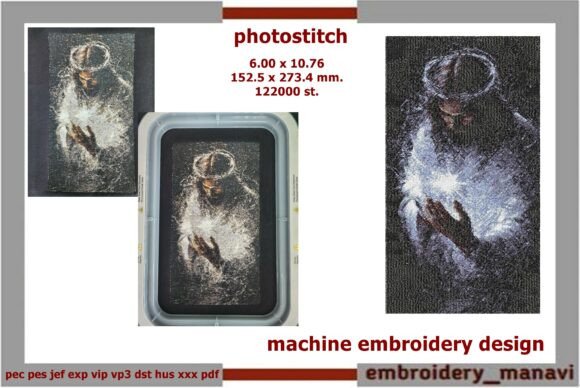
When I first opened the Jesus Christ Photostitch embroidery file, what struck me wasn’t just the subject—it was how quietly, confidently alive it felt. This isn’t a stiff icon or a flattened religious motif. It’s a luminous, layered machine embroidery design where light seems to emanate from within the figure, not just around him. The photostitch technique gives it soft transitions and subtle gradients—no harsh edges, no cartoonish simplification. As a designer who’s stitched hundreds of faith-based motifs for boutique clients and Etsy sellers, I immediately saw its potential: not as background filler, but as a centerpiece with emotional weight.
Where It Finds Its Truest Home
Last week, I used Jesus Christ Photostitch on a natural linen tote bag for a local church gift shop. We chose unbleached fabric—not white, not black—to let the divine light in the design glow without glare. The result? A finished product that looked handmade, reverent, and quietly confident. No shouting. No cliché. Just presence. That’s where this design shines: on items meant to be held, carried, or gifted with intention—baby blankets for baptismal gifts, kitchen towels for pastoral care packages, pillow covers for hospice ministry, or aprons for faith-based cooking classes.
It also works beautifully on mid-weight sweatshirts and structured caps—but only when placed thoughtfully. I tested it centered on a navy cotton-poly blend cap, and while the detail held up, the radiance softened slightly on the curved crown. For best impact, stick to flat or gently contoured surfaces: tote bags, tea towels, front-of-apron placements, or square pillow covers.
What You’ll Notice After the First Stitch
The Jesus Christ Photostitch doesn’t rely on dense fill stitches to impress. Instead, it uses intelligent stitch density—lighter in luminous zones, richer in shadowed contours—so it breathes on fabric instead of flattening it. That means less stabilizer bulk, softer drape on apparel, and fewer puckering surprises on medium-weight knits. But don’t assume it’s low-maintenance. On thin fabrics like lightweight rayon or baby jersey, you’ll need tear-away + cutaway combo stabilizer. On dark fabric, test thread colors carefully—the “radiant light” effect depends heavily on contrast between metallic or pale gold thread and background tone.
I ran it on a cream-colored organic cotton onesie (for a newborn dedication gift) using pale ecru thread and a light cutaway stabilizer. The expression stayed tender, the hands remained legible, and the light halo didn’t blur into the fabric. That told me: yes, it translates well to baby embroidery—if stabilized right.
Where Caution Is Part of the Craft
- Small hoop sizes: This design needs room. If your hoop is under 5x7", consider scaling down only after testing—some facial subtlety and light gradation may compress into ambiguity.
- Stretchy fabric: Avoid direct use on heavy knits without proper stabilization. The photostitch’s fine tonal shifts can distort if the ground fabric moves during stitching.
- Detailed corners & layered garments: Don’t place it near seams, pockets, or zippers on jackets or hoodies. The light rays extend outward; crowding them risks visual clutter or skipped stitches.
- Frequent-wash items: While stitch density is balanced, the delicate luminosity relies on thread sheen. Recommend gentle cycles and air-drying for embroidered pillow covers or baby blankets.
More Than a Motif—A Trust Signal
For Etsy sellers and small shop owners, the Jesus Christ Photostitch does something subtle but powerful: it signals care. Not just in execution—but in reverence. Customers browsing faith-based handmade products often scroll past generic crosses or bold scripture quotes. But this design invites pause. It feels considered. That elevates perceived value, supports higher pricing, and deepens buyer engagement—especially for personalized gifts like communion keepsakes or pastoral appreciation items.
I’ve seen craft fair shoppers linger over a display of tea towels featuring this design, then ask about customization options. That’s not accidental. The human expression, the gentle posture, the absence of ornamentation—it all reads as sincere, not commercial. That sincerity carries into branding, too. When used consistently across a line of nursery decor or holiday embroidery kits, Jesus Christ Photostitch becomes part of a quiet, cohesive design language—one that honors tradition without leaning on tropes.
Your Practical Designer Checklist
- Test the Jesus Christ Photostitch on scrap fabric matching your final project’s weight and stretch.
- Review stitch density in the file preview—look for smooth transitions, not muddy clusters in the light areas.
- Confirm hoop size compatibility before hooping; avoid forcing it into tight spaces.
- Inspect small details at 200% zoom: eyelids, fingers, light rays—do they read clearly at your intended size?
- Run black-and-white mockups alongside color versions to assess contrast and silhouette strength.
- Compare performance on both light and dark fabric backgrounds—you’ll likely need different thread palettes.
- Use appropriate stabilizer: cutaway for knits, tear-away for stable wovens, fusible + cutaway for sheer layers.
- Verify licensing terms before selling finished products or bundling the digital embroidery file with other design assets.
Final Thought: It’s About Resonance, Not Reproduction
This isn’t a design you choose because it’s trending. You choose Jesus Christ Photostitch because it resonates—with your values, your customers’ expectations, and the quiet dignity of handmade work. It fits seamlessly into custom apparel, holiday embroidery, nursery decor, and small business merchandise—not as decoration, but as intention made visible. Whether you’re stitching a single baptismal blanket or building a full line of faith-centered craft business offerings, this embroidery file earns its place by balancing artistry with wearability, reverence with realism, and detail with discretion.