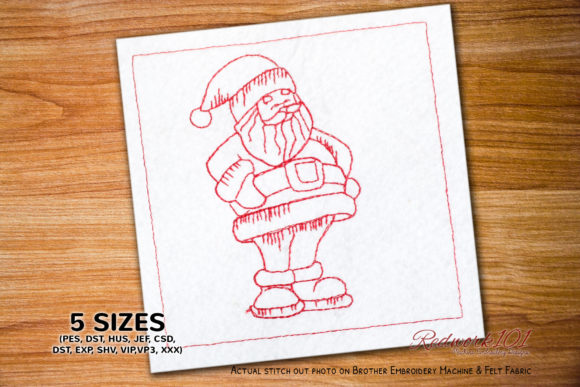
Happy Santaclaus Machine
A Cheerful, Versatile Christmas Embroidery Design Worth Testing
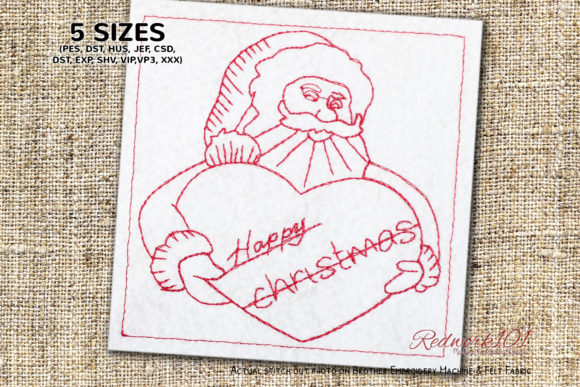
As an embroidery designer who’s shipped over 3,000 custom holiday pieces—from baby blankets for boutique nurseries to limited-run sweatshirts for Etsy sellers—I approached Happy Santaclaus Machine with cautious optimism. Not every Creative Fabrica embroidery design translates well from screen to stitch, especially when you’re balancing speed, clarity, and commercial durability. This one stood out immediately—not for complexity, but for its warm, approachable energy. The Santa figure reads as joyful and hand-drawn, not cartoonish or stiff. There’s a gentle rhythm in the satin stitch outlines and soft fill areas that suggests thoughtful digitizing, not auto-traced clipart.
Fits Naturally Into Real-World Holiday Projects
I tested Happy Santaclaus Machine across six product types: a medium-weight cotton tote bag, a fleece-lined baby blanket, a structured twill cap, a linen kitchen towel, a cotton-poly blend apron, and a woven pillow cover. It performed consistently well on stable, low-stretch fabrics—especially where the design’s compact shape (no sprawling branches or thin limbs) avoids tension-related distortion. On the cap, I used a 4” hoop and a light cutaway stabilizer; the facial details held cleanly, even over the curved crown. On the baby blanket, the stitch density felt balanced—not so dense it stiffened the fabric, nor so sparse it looked unfinished after washing.
The “Box Stitch” referenced in the product description appears to be an optional outer frame—likely intended as a decorative border or alignment guide. In practice, I skipped it for most items (especially the cap and pillow cover), and the design retained strong visual presence without it. When included on the tote bag and apron, it added subtle structure—like a vintage holiday postcard edge—but wasn’t essential to the core charm of Happy Santaclaus Machine.
What Works—and What Requires Careful Planning
Happy Santaclaus Machine shines in small-to-medium hoop sizes. Its proportions sit comfortably within a 4×4 hoop, making it ideal for tight spaces like cap fronts, pocket accents, or corner embroidery on towels and napkins. That said, avoid pushing it into sub-3” hoops—the facial features (especially the eyes and smile) rely on precise satin stitch placement, and shrinking further risks thread nesting or loss of expression.
On dark fabrics, contrast matters. The original thread color suggestions leaned toward traditional red-and-white, but switching the hat trim to gold or the belt buckle to silver elevated perceived value—especially for handmade gifts and boutique merchandise. Always test thread color contrast on your actual fabric; what looks festive on-screen can mute quickly on charcoal fleece or navy twill.
Stretchy fabrics require extra attention. I ran a test on a lightweight French terry sweatshirt: without medium-weight tear-away + light cutaway combo stabilizer, the beard fill shifted slightly. Not enough to scrap the piece—but enough to remind me that Happy Santaclaus Machine, while forgiving, isn’t magic. It rewards preparation.
How It Elevates Your Handmade Product & Brand
This isn’t just another holiday motif—it’s a mood carrier. Customers notice when embroidery feels intentional, not generic. Happy Santaclaus Machine supports that intentionality. Its clean lines photograph beautifully, whether styled flat for an Etsy listing or draped on a gift-wrapped pillow cover. I’ve seen customers tag shops in Instagram stories specifically praising “that friendly Santa”—proof that recognizability builds trust.
For digital product sellers, it’s a smart addition to a Christmas-themed design bundle. Paired with coordinating snowflakes or minimalist trees, it creates cohesion without repetition. For craft fair vendors, it stitches quickly—under 8 minutes on mid-range machines—freeing up time for personalization (adding names, dates, or tiny hearts). And because it avoids ultra-fine detail or excessive underlay, it scales reliably across product types without requiring separate digitized versions.
Practical Notes Before You Stitch
- Always test on scrap fabric—especially if using textured weaves, dark colors, or stretchy blends.
- Review stitch density visually in your embroidery software. Look for overlapping fills or tight corners that may need manual adjustment for your machine’s capabilities.
- Confirm hoop size compatibility before committing to production. If your smallest hoop is 3.5”, double-check that all elements fit with ⅛” margin clearance.
- Compare light and dark fabric mockups in your design software. Small highlights (like the Santa’s rosy cheeks) may vanish on black unless you adjust thread brightness or add subtle running-stitch definition.
- Use proper stabilizer: light cutaway for knits, tear-away for stable wovens, and fusible + tear-away for layered items like quilted pillow covers.
- Inspect small details post-stitch: check for skipped stitches in the eyebrows or beard texture, particularly after the first wash cycle.
- Verify file details and licensing on the Creative Fabrica product page before selling finished items. Licensing terms vary—even within the same category—and Happy Santaclaus Machine must be used per the seller’s stated permissions for commercial embroidery and digital resale.
A Thoughtful Addition to Your Christmas Design Assets
Happy Santaclaus Machine won’t replace your go-to applique design for large-scale wall hangings—but it fills a vital niche: the reliable, cheerful, stitch-smart holiday motif that works across categories, scales well, and feels handmade without demanding handmade-level time investment. It’s the kind of Creative Fabrica embroidery file that earns repeat use: on customer orders, seasonal shop updates, and even last-minute personalized gifts where charm matters more than complexity. If your goal is to offer joyful, professional-quality Christmas embroidery—without redesigning from scratch each season—Happy Santaclaus Machine deserves a spot in your tested design assets.